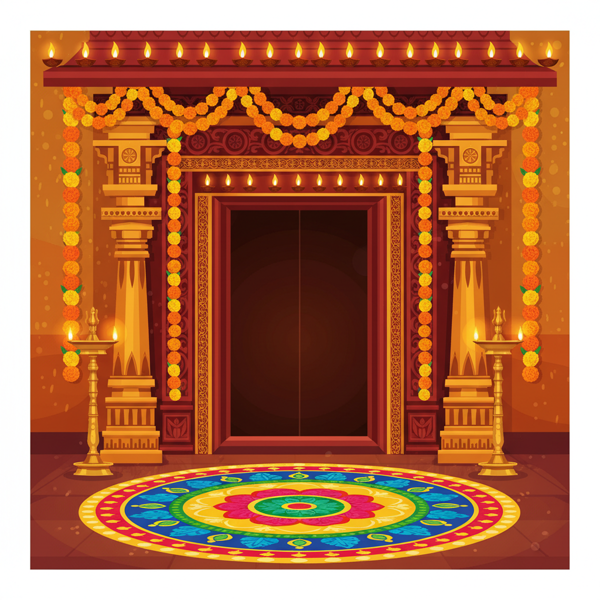
Rows of oil lamps, rangoli at every doorstep
Walk through Brickfields or Little India on the eve of Deepavali and you'll see the same thing repeat at almost every house. A cluster of diyas, small clay oil lamps, burning on the front step. A chalk or rice-powder kolam design spreading across the floor. The smell of ghee and curry leaves from the kitchen. Sweet shops running out of murukku by late afternoon.
Deepavali, also spelled Diwali outside Malaysia, is one of the most widely observed Hindu festivals in the country. It's a federal public holiday almost everywhere. Let's walk through what it actually celebrates and how it plays out in Malaysian homes. For the exact 2026 date, check the year calendar.
What Deepavali commemorates
The name Deepavali comes from the Sanskrit deepa (lamp) and avali (row). Literally: a row of lamps. The festival celebrates the triumph of light over darkness, good over evil, knowledge over ignorance.
The specific mythology varies by region in India, but in Malaysia the dominant Tamil Hindu tradition centers on the defeat of the demon Narakasura by Lord Krishna. The lamps symbolise the return of light after his death, and the welcoming of goodness back into the world.
In practice, Deepavali in Malaysia is a family-centered day. Work stops, relatives gather, and most of the rituals happen at home rather than at temple.
How Malaysian Hindus celebrate
The day usually runs something like this:
Pre-dawn oil bath. The most distinctive Malaysian tradition. Before sunrise, family members take a ritual bath using sesame oil and turmeric. This symbolises purification and the start of a new cycle. Elders bless the younger ones.
Prayer at home altars. Most families have small shrines at home. Offerings of fruits, sweets, and lamps are placed before images of Lakshmi (goddess of wealth and prosperity) and other deities.
Open houses. Deepavali in Malaysia shares a tradition with Hari Raya and Chinese New Year: the rumah terbuka. Friends and colleagues of all backgrounds are invited to drop by for food and chat. Expect murukku, ladoo, jalebi, and plenty of rice-based dishes.
Firecrackers. Technically restricted in most states, but you'll still hear them in the weeks leading up.
Temples stay open for longer hours, and places like Batu Caves, Sri Mahamariamman in KL, and the numerous Tamil temples in Penang and Ipoh see heavy visitor traffic.
Deepavali as a public holiday
Deepavali is a federal public holiday observed in all 13 states and 3 federal territories, with one historical exception: Sarawak has traditionally not gazetted it as a state public holiday, though in practice it's observed in urban areas with Hindu populations. Labuan follows the federal gazette.
If you live in Sarawak, your state calendar may show it as an observance rather than a full day off. Double-check before you book leave.
Deepavali 2026: when does it fall?
Deepavali is calculated using the Hindu lunisolar calendar. It falls on the new moon (amavasya) of the month Kartik, which lands in October or November depending on the year.
In 2026, Deepavali falls on Sunday, 8 November, which means most states observe a replacement holiday on Monday, 9 November. That's a natural long weekend for anyone who celebrates or just wants one.
Check the November 2026 calendar for the full picture of holidays and weekends around that date.
Food and sweets
No Deepavali guide is complete without the food list. The sweets that matter:
| Sweet | What it is |
|---|---|
| Murukku | Crunchy savoury spiral snack made from rice and urad flour |
| Ladoo | Round balls of gram flour, sugar, and ghee |
| Jalebi | Orange, spiralled, deep-fried sweets soaked in syrup |
| Gulab jamun | Fried milk-solid balls in rose syrup |
| Athirasam | Rice-and-jaggery fried discs |
| Kesari | Semolina sweet, sometimes studded with raisins |
The savoury side includes biryani, chicken varuval, mutton curry, and plenty of pooris. Most Malaysian Hindu families prepare this themselves, but Little India bakeries start selling packaged Deepavali sweets about two weeks out.
Kolam: the welcome mat made of rice
Kolam are geometric patterns drawn on the floor at the entrance of homes and businesses. Traditionally made from rice flour (so that ants and birds can eat it), they serve as a welcome to the goddess Lakshmi and any guest who visits.
During Deepavali, kolam get more elaborate. Coloured rice powder, flower petals, and lit diyas transform them into small art installations. Many shopping malls in KL, Penang, and Ipoh host giant kolam competitions in the week leading up.
Traffic, travel, and planning
Like Hari Raya and Chinese New Year, Deepavali creates measurable balik kampung traffic. Hindu Malaysians living in KL often travel back to smaller towns in Perak, Kedah, Negeri Sembilan, and Johor. Highway congestion is real in the 48 hours before and after.
A few planning tips:
- If you're invited to an open house, go on Deepavali day or the weekend after. Most families host for several days.
- If you're travelling around the date, book trains and flights well in advance. KTM's Butterworth route is particularly busy.
- Many Hindu-owned businesses in Brickfields, Sentul, and parts of KL close for 2-3 days.
Celebrating across religious lines
One of the more distinctive things about Malaysian Deepavali is how freely it crosses religious boundaries. Non-Hindu Malaysians attend open houses, send greetings, and often wear saree or kurta to Hindu friends' parties. Schools and offices put up decorations. Malls run Deepavali promotions alongside Christmas and Hari Raya.
That doesn't dilute the religious core of the day. It just makes Deepavali, like Hari Raya and Chinese New Year, another moment in the national calendar where everyone participates a little, and the people celebrating most deeply get to share their tradition with the rest of the country.
See the full list of 2026 federal and state observances on the year calendar. If you're new to how holidays differ by state, our guide to federal vs state holidays covers the rules.